


Essential Life Skills Playbook for Kids
Essential Life Skills Playbook for Kids
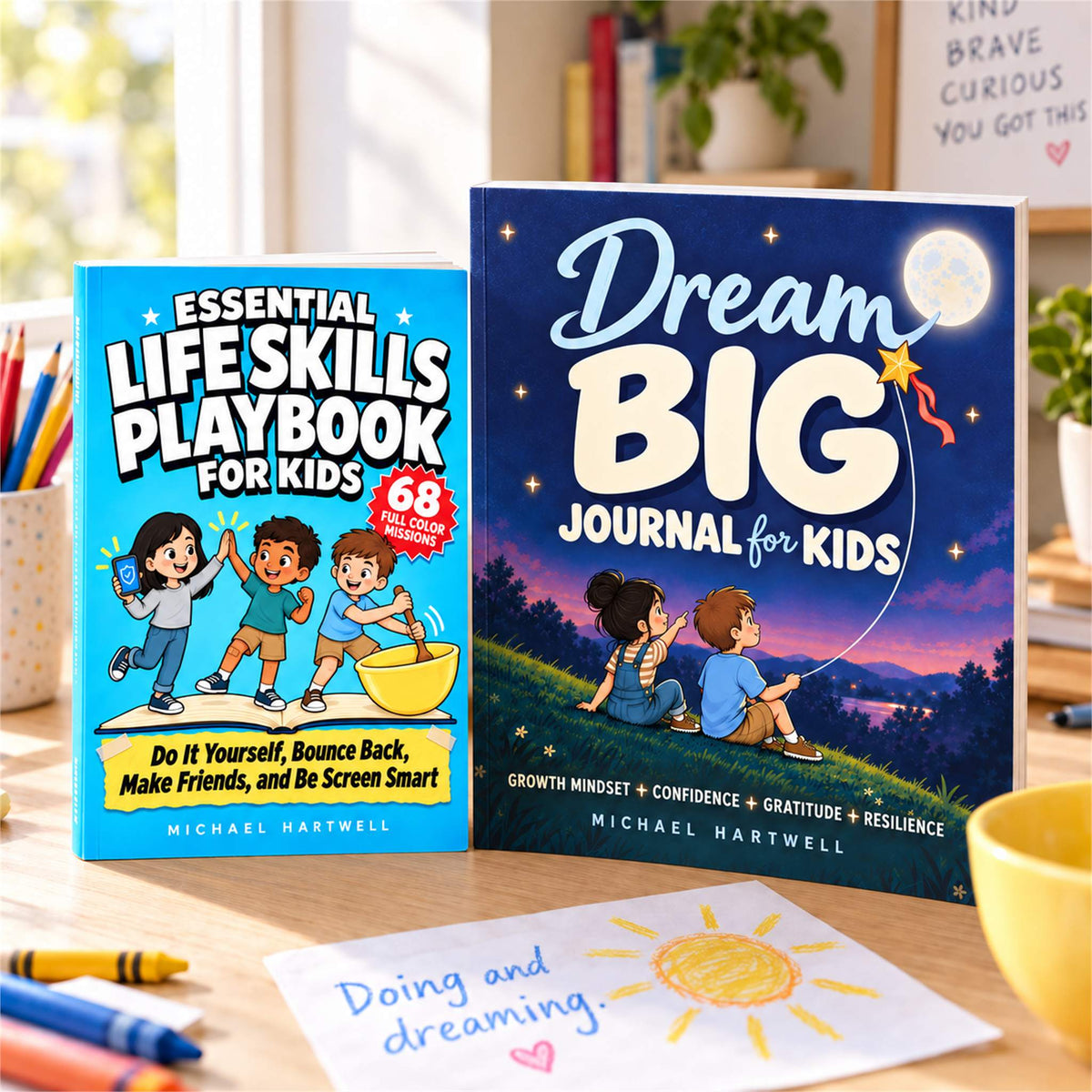
🍳 Cook, clean, and fix things with step-by-step missions
🚨 Know exactly what to do in an emergency, and when to get help
💬 Talk to any grown-up and make (and keep) friends
📱 Build healthy phone habits before the first phone
✅ 68 full-color missions on a 30-day signed Mission Chart
BUNDLE & SAVE
Couldn't load pickup availability
- Paypal payment method
- Visa payment method
- Master payment method
- Diners club payment method
- Shopify pay payment method
- Discover payment method
- American express payment method
- Apple pay payment method
- Google pay payment method

Essential Life Skills Playbook for Kids
Book Specifications
Book Specifications
📄 Length: 147 full-color pages with 68 missions
📏 Format: US Trade Size (6" × 9")
📘 Binding: Softcover/paperback edition
🎨 Illustrations: Full-color art and a friendly crew of characters on every mission
🧒 Ages: 6 to 11, with a sweet spot of 7 to 11


Give Them the Skills to Handle Real Life, One Mission at a Time

The Skills Kids Aren't Learning in School
Kids learn fractions, spelling, and the water cycle. But who teaches them to cook a quesadilla safely, tell 911 exactly where they are, ask a teacher for help, or leave a group chat that's turned mean?
That's the gap this playbook fills.
Every mission gives kids one clear challenge, simple steps, an Ask First safety check, and a Fix-It for when things go sideways. They're not just reading about life skills. They're doing them.

More Than a Book. A 30-Day Practice Plan.
This isn't a list of tips your kid will skim and forget. 68 missions are organized into four weeks, so kids always know what's next.
Week 1, Home Base: feed yourself, take care of your stuff, and handle an emergency.
Week 2, Your Own Head: big feelings, boredom, and good decisions.
Week 3, Other People: talk to any grown-up, make friends, and stand your ground.
Week 4, The Wider World: earn and save money, use phones wisely, and go out and come back.

One Mission a Day. Zero Lectures. Real Confidence.
You don't have to plan lessons or nag. The playbook gives your kid the plan, so you can be the backup.
Missions speak directly to kids, with clear steps, real scripts for awkward moments, and a quick "How did it go?" at the end of each chapter.
- Step 1: Hand them the playbook and let them pick a mission.
- Step 2: They read the steps, check Ask First with you, and try it for real.
- Step 3: They sign and date the Mission Chart, show you, and pick the next one.

The Best Time to Start Is Now
Every "I did it myself" builds the confidence for the next thing. The kid who can order for the family today is ready to call the lost and found tomorrow and plan a trip after that.
The skills they practice now become the ones they rely on later, when you're not standing right beside them.
Give them a playbook that turns growing up into a mission they actually want to complete.

Why This Playbook Is the Clear Choice
Many life skills books for kids are pages of text that feel like homework. Kids skim, nod, and never try anything.
The Essential Life Skills Playbook is different.
Each skill is a mission with a clear goal, what you'll need, simple steps, and a Fix-It. Scripts for "if it goes sideways" help kids handle real moments, not just read about them.
Give them a playbook they'll actually use, and finally check "ready for real life" off your parenting list.


Parent Reviews
Excellent 4.8 / 5
Frequently Asked Questions
What age is this playbook for?
What age is this playbook for?
The Essential Life Skills Playbook is made for kids ages 6 to 11, with a sweet spot of 7 to 11. Younger kids can do many missions with a grown-up nearby, while older kids can lead most of them on their own.
Are the missions safe for kids?
Are the missions safe for kids?
Safety is built into every mission. Each one includes an Ask First check, so a grown-up approves things like knives, the stove, and outings before your child starts. Emergency missions are practiced with pretend phones and never involve dialing 911 for real.
How long does each mission take?
How long does each mission take?
Many missions take just a few minutes, like building a breakfast or practicing a phone call. Some, like running the house jobs for a week, take longer. The 4-week plan keeps things moving, but kids can go at their own pace.
What skills does it cover?
What skills does it cover?
68 missions across 13 skill areas: cooking, taking care of your stuff, handling emergencies, big feelings, boredom, good decisions, talking to grown-ups, friendships, standing your ground, money, phones, getting around, and a final quest of their choice.
Does my child need to be a strong reader?
Does my child need to be a strong reader?
No. Missions use short steps, clear headings, and full-color pictures. Younger or newer readers may want help reading the steps the first time, then they can take it from there.
How involved do I need to be?
How involved do I need to be?
You're the backup, not the teacher. Your child reads the mission, checks Ask First with you, and does the work. You approve, cheer, and sign off on the Mission Chart.
Does it cover phones and online safety?
Does it cover phones and online safety?
Yes. A whole chapter helps kids decide if they're ready for a phone, build a family phone plan, check how they feel after scrolling, leave a group chat, say no online, handle a pile-on, and spot fake messages before they click.
What if my child gets something wrong?
What if my child gets something wrong?
That's part of the plan. Every mission includes a Fix-It or an "if it goes sideways" script, so kids learn how to recover, adjust, and try again instead of giving up.
Is it a good gift?
Is it a good gift?
It makes a great birthday, holiday, or summer-break gift. The full-color missions and Mission Chart give kids something fun to work through, and parents love seeing the results.
How is it different from other life skills books?
How is it different from other life skills books?
Most life skills books for kids are pages of text. This playbook turns every skill into a hands-on mission with steps, safety checks, real scripts, and a signed chart, so kids practice the skills instead of just reading about them.